Oranjezicht Blinds / Products / Venetian blinds
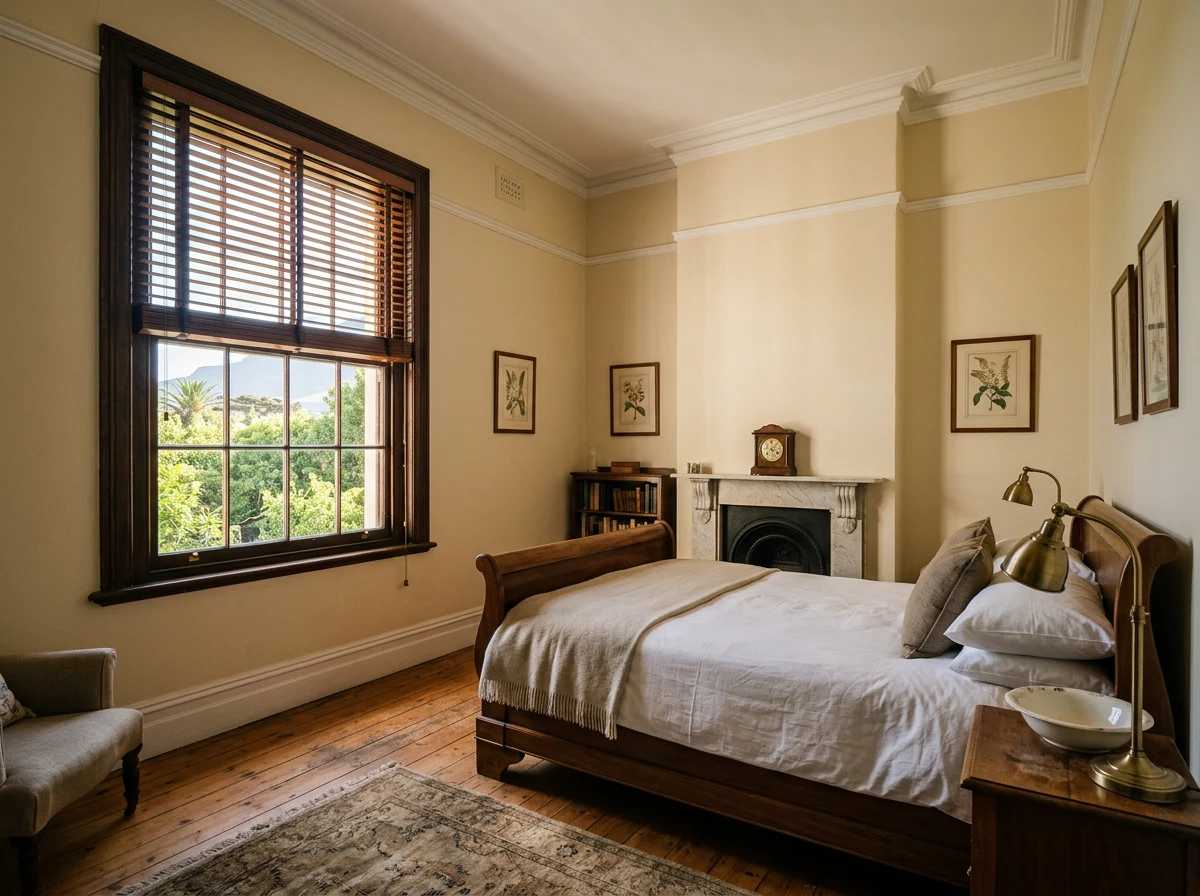
Venetian blinds, the natural fit for a sash window
Timber slats for original joinery, sealed aluminium for damp rooms — both tilt the light instead of simply stopping it.
Adjustability is the whole argument
A roller is open or closed by degrees. A venetian steers light direction — tilt up for glare-free daylight, tilt down for privacy from an overlooking balcony across the street, close flat for dark. On a City Bowl house where the sun swings from 75° in December to 31° in June, that hour-by-hour control matters more than it does almost anywhere else in Cape Town.
We fit two families. Timber, on wide slats and woven ladder tapes, is the material an Oranjezicht sash window was designed around — it belongs on original joinery the way a roller sometimes doesn’t. Aluminium, in a slimmer sealed-finish slat, is the better answer wherever damp is the real problem: bathrooms, kitchens, and any south-facing room that stays cold and shaded through a wet Cape winter.
Timber or aluminium — the honest comparison
Timber, 50mm slats
Basswood on woven ladder tapes. The heritage-home natural — suits sash and casement windows, studies, and anywhere the original material matters to the room.
Aluminium, 25mm or 50mm
Slim crisp lines or a bolder 50mm slat, in a huge colour range including woodlook finishes. The moisture champion — bathrooms, kitchens, sculleries.
Wide vs narrow reveal
Deep-set Victorian and Edwardian reveals usually take a slim venetian headrail without any fixing into the sash itself — the reveal depth decides which finish sits flattest.
Motorised tilt
Available on both families for a window that’s awkward to reach — a stairwell sash, or a run of windows you want tilting together on one switch.
What decides whether it looks right, not just fits
- Reveal depth measured before a finish is recommended — a slim aluminium headrail can sit inside a reveal a timber one can’t
- Wide windows split or ladder-tape-supported rather than hung as one overweight run of timber slats
- Sealed lacquer finish on timber near any room that runs even mildly humid, not just full bathrooms
- Wand-tilt or cordless operation recommended for nurseries and kids’ rooms, with tensioners fitted as standard wherever a cord remains
- Colour matched to frame or wall trim rather than picked in isolation, since a venetian headrail sits right at the sash line
One street, two joineries, two answers
A single Oranjezicht street can hold an original narrow-sash Victorian terrace next to an architect-renovated home with a frameless glass extension at the back — at least two, often three, specifications on the same block. On the original front rooms, wide timber slats on a slim headrail respect the sash and give real control over light that swings hard between a high summer sun and a low winter one. In the damp lower-Bowl rooms that lose the winter sun early, sealed aluminium copes with the condensation a timber slat won’t.
Where a house sits inside the City Bowl’s Heritage Protection Overlay Zone — which covers all of neighbouring Tamboerskloof and the lower half of Oranjezicht — a venetian fitted inside the reveal is a furnishing decision, not a structural one, so it doesn’t trigger the permit process that applies to anything fixed to the outside of a building older than sixty years.
Venetian blinds across the City Bowl
The timber-versus-aluminium call comes up on architect glazing in Higgovale, iron-lace Victorians in Tamboerskloof, Company’s Garden apartments in Gardens and windswept blocks in Vredehoek just as often as it does here.
Worth knowing before the measure
Timber or aluminium — which should we choose?
Timber suits original joinery, studies and anywhere the material itself is part of the room. Aluminium is the honest choice for damp — bathrooms, kitchens, and any south-facing room that runs cold through winter. The consultant will say which one a specific room needs rather than sell the more expensive option by default.
Will a venetian headrail fit inside our sash reveal?
Most of the time, yes — venetian headrails are slim by design. We measure the reveal depth at the free assessment; where it’s genuinely too shallow we fit outside the reveal instead, sized to sit flush with the architrave.
Do timber venetians need much maintenance near the sea?
The City Bowl is a genuinely coastal setting, though lighter on salt than the exposed Atlantic Seaboard. A quality sealed lacquer copes with normal humidity; we wouldn’t recommend raw, unsealed timber on a window that gets direct sea-facing exposure.
Other things we fit in Oranjezicht
Not sure if your reveal takes a venetian?
The consultant measures reveal depth and frame type on site and recommends timber, aluminium or a roller — whichever the window actually needs.
Tell us about your windows
Tell us which rooms you are looking at and roughly how many windows. One of our expert consultants will contact you shortly to arrange your free in-home measure.
- No obligation, no call-centre — a consultant calls you directly
- Fabric samples brought to the measure, not just a screen swatch
- Written, itemised quote before anything is ordered